Power & SitesUnited States
California Resources and Bloom Energy eye 1GW of fuel cells across California to power data centers and other offtakers
Intend to couple the systems with carbon capture and storage
Independent energy firm California Resources Corporation (CRC) and Bloom Energy have partnered to evaluate the development of 1GW or more of fuel cell generation in California, with data centers among the targeted offtakers.
The companies signed a non-binding Memorandum of Understanding that will evaluate the deployment of Bloom's solid oxide fuel cells (SOFC), coupled with carbon capture systems.
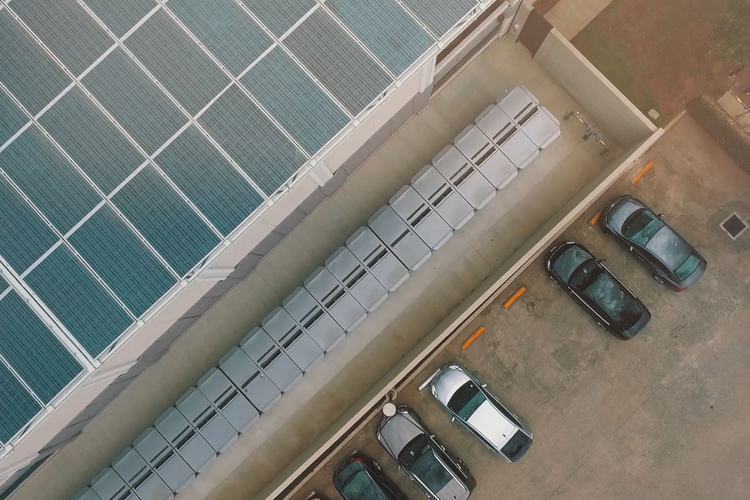
Bloom is a developer of SOFC generators, dubbed the Bloom Box, which are stationary power generators that convert fuels into electricity through an electrochemical process without combustion. While they can be powered via hydrogen, at present the vast majority rely on natural gas.
The companies said they will look for offtake customers including data centers, utilities, community choice aggregators, municipalities, and other industrial users. In addition, they have said they will complete the interconnection and permitting work needed to bring projects online.
The plan covers front-of-the-meter and behind-the-meter projects in Central and Northern California. The front-of-the-meter projects would connect to utility offtake. The behind-the-meter projects, across CRC’s Central Valley footprint, would serve industrial users seeking on-site power.
Bloom would supply the fuel cells and third-party carbon capture technology. CRC’s carbon management business, Carbon TerraVault (CTV), is expected to handle CO2 transport and storage, with CRC managing the projects.
The companies said Bloom’s fuel cells produce a high-concentration CO2 exhaust stream, which they claim makes capture more efficient and cost-effective. The partners said that up to three million metric tons per annum of CO2 could potentially be captured and stored.
“California needs more clean, firm, reliable, and affordable power generated here at home. We are uniquely positioned with land, vast subsurface storage, and CO2 transportation and storage expertise,” said Francisco Leon, CRC’s president and CEO. “When combined with Bloom’s non-combustion technology with highly efficient carbon capture, we are positioned to deliver clean and affordable energy to power data centers and the grid at scale.”
Aman Joshi, Bloom’s chief commercial officer, added: “Our non-combustion technology makes carbon capture more efficient and economically viable at scale, opening a new path to carbon-neutral power generation and addressing the decarbonization needs of large critical infrastructure.”
Bloom has signed a range of deals across the data center spectrum over recent years.
Earlier this year, it expanded an agreement with cloud firm Oracle to supply it with up to 2.8GW of capacity. The companies inked a deal last year for an initial 1.2GW of capacity. However, deployments of the technology at Oracle’s Jupiter data center in Doña Ana County, New Mexico, have faced roadblocks due to opposition to the extension of a gas pipeline expected to feed the facility's fuel cells.
Bloom has also signed deals with Equinix for deployments across 19 data centers with a capacity exceeding 100MW, as well as an agreement with US utility American Electric Power for up to 1GW of SOFCs to power AI data centers off-grid. In October, AEP signed a 20-year Power Purchase Agreement with Google, which committed to offtake 702MW of power from a fuel cell generation project near Cheyenne, Wyoming, which utilizes Bloom’s fuel cells.