Power & SitesUnited States
How Advanced Nuclear Can Expand Utility Options
That is the staggering volume of generation and storage capacity currently trapped waiting in U.S. interconnection queues. According to data from RMI, the typical project now takes almost five years—stuck in administrative and transmission review before a single watt can be delivered to the grid. In 2008, it was only two years. For traditional utilities navigating today’s explosive demand, that timeline has become a structural crisis.
Driven by the immediate, expanding load growth of artificial intelligence (AI) data centers and compounding power needs, utilities and their customers increasingly cannot wait five years for new transmission capacity. They must increasingly consider localized generation solutions alongside traditional transmission expansion. For years, advanced nuclear was framed as a futuristic disruption story meant to completely overhaul the utility business model. The reality today is far more practical. Power providers need tactical optionality.
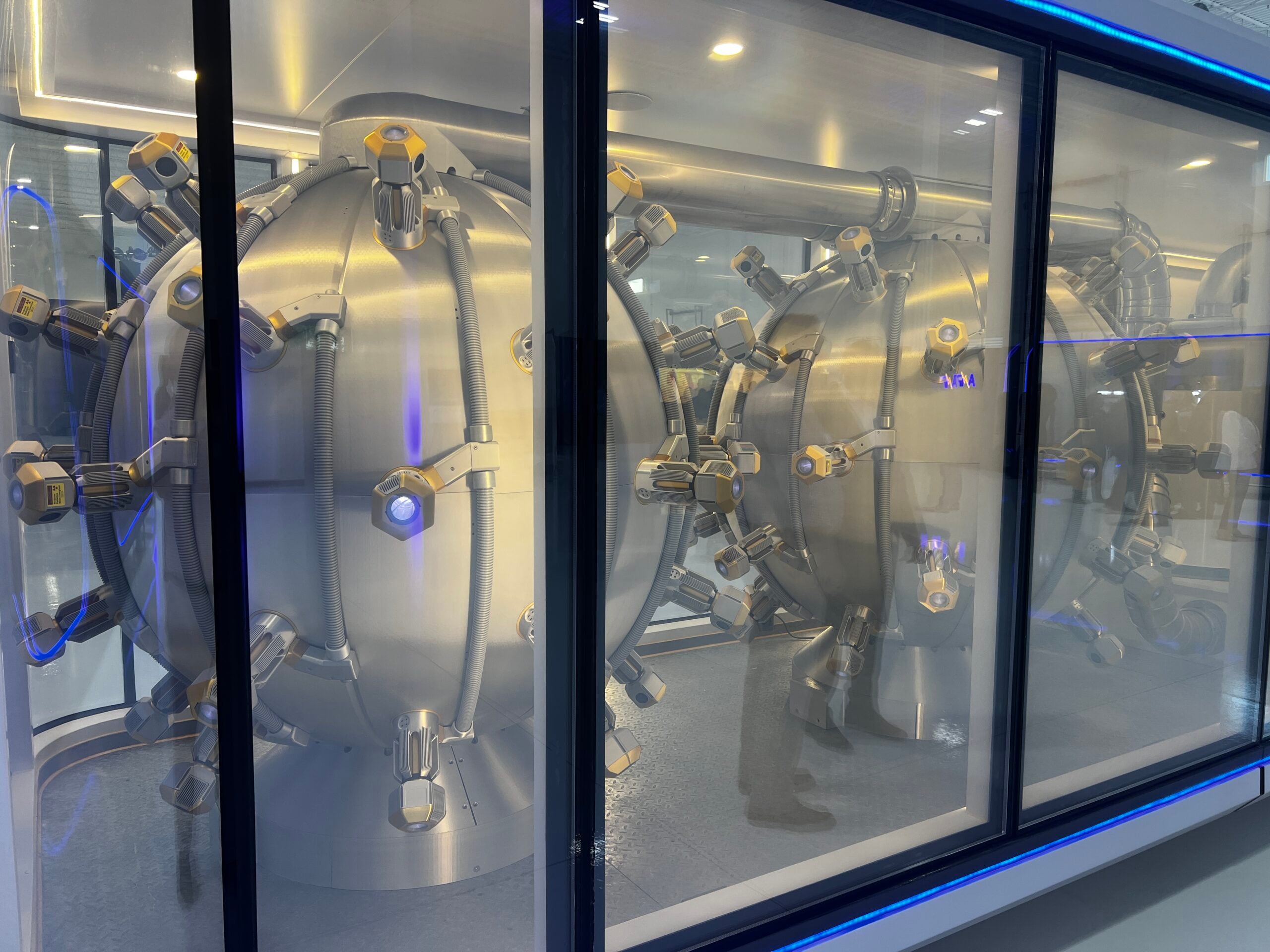
By packing resilient power into localized footprints that can reduce dependence on lengthy transmission expansion while providing firm generation closer to growing loads, small modular reactors (SMRs) and advanced microreactors are transitioning from speculative future technologies into indispensable tools for immediate grid flexibility.
After decades in which the electric system largely evolved through centralized generation and expanding transmission networks, utilities are entering an era where some of the fastest-growing loads may require a different approach. The question is no longer whether advanced nuclear will have a role, but how utilities can thoughtfully incorporate these new technologies alongside existing generation and transmission investments to improve reliability, resilience, and customer service.
Where Small Modular Reactors Make Sense
Utilities serving remote regions, constrained corridors, or fast-growing industrial areas often face a dilemma where the demand is there, but transmission isn’t—and building it takes years and capital.
Consider a rapidly growing metropolitan area where a new AI data center requires several hundred megawatts of firm power, but transmission upgrades are years away. Rather than viewing that demand solely as a transmission challenge, utilities may increasingly have the option to pair localized advanced nuclear generation with existing grid infrastructure, serving new load while reducing pressure on the broader system.
Because SMRs and advanced microreactors are designed to provide reliable power at a smaller generating scale, they let utilities add firm capacity without a full transmission overhaul. For some load pockets, that’s the difference between serving new customers on a reasonable timeline or not serving them at all. In some deployment models, localized generation could also help reduce transmission congestion and provide additional support to surrounding grid infrastructure during periods of peak demand.
Some next-generation designs are even being envisioned as distributed energy assets that could function similarly to other localized resources, providing power where it is needed most while creating opportunities to return excess generation back to the broader grid. Future distributed nuclear systems could provide localized firm generation while also supporting the broader grid when excess capacity is available.
Some advanced designs may also be capable of providing grid support services such as frequency regulation, voltage support, and spinning reserve, expanding their value beyond energy production alone.
The Data Center Problem Is Pushing This Conversation Forward
One of the clearest drivers behind renewed nuclear interest is the immense growth of AI infrastructure and hyperscale data centers. According to Omdia, global cloud infrastructure spending reached $110.9 billion in the fourth quarter of 2025, and is expected to keep growing.
Hyperscale data centers don’t just need large amounts of electricity, they need it with an extremely high degree of reliability. The combination of scale and uptime requirements is straining existing interconnection queues and pushing utilities to think differently about dedicated generation assets and long-term capacity planning. Rather than viewing these large loads solely as transmission challenges, utilities increasingly have opportunities to evaluate localized generation as part of an integrated planning strategy.
As AI-driven energy demand continues to grow, utilities will need a mix of generation assets capable of balancing reliability and load growth simultaneously. SMRs and advanced microreactors will ultimately become one piece of that strategy. For utilities, the appeal is firm power closer to major load growth without placing the entire burden on existing transmission infrastructure.
Subcritical nuclear technologies may become especially valuable in this environment because they combine enhanced safety characteristics with operational flexibility. Unlike conventional critical reactors, subcritical systems rely on an external neutron source to sustain fission, providing an additional layer of operational control because fission can only be sustained while the external neutron source is operating. That capability could make them particularly well suited for applications where electrical demand changes quickly, allowing utilities to better match generation with evolving load profiles while maintaining firm, carbon-free power.
Historically, nuclear generation has been optimized for steady baseload operation. Many advanced reactor concepts, however, are being designed with greater operational flexibility, enabling them to complement variable renewable generation and respond more effectively to changing system demand.
Equally important, innovation is occurring well beyond reactor physics. Developers are rethinking reactor architectures, fuels, manufacturing methods, and deployment models with the goal of making advanced nuclear faster to build, easier to replicate, and more economically scalable. If advanced nuclear is to play a meaningful role in meeting the nation’s rapidly growing electricity demand, success will depend not only on licensing new designs but also on transforming how those designs are manufactured and deployed.
Resilience and Optionality Are the Long Game
The utility sector is entering a planning era that demands more flexibility, not less. The challenges are multiplying from load growth, decarbonization, extreme weather, aging assets, to evolving customer expectations, and they’re arriving simultaneously. No single generation source addresses all of them.
For utilities building long-range infrastructure strategies, having a generation asset that continues operating regardless of weather conditions and can support critical infrastructure during prolonged outages is invaluable. Many SMRs are being developed with the ability to operate independently of the larger grid, enabling them to maintain power to critical facilities during prolonged outages and support restoration efforts following major grid disruptions.
What SMRs and advanced microreactors offer utilities is another tool in a diversified resource strategy; a scalable, firm, low-carbon asset that can be deployed incrementally as demand and economics support it. Because advanced nuclear delivers extraordinary energy density within a compact footprint, it offers utilities another option where land availability, transmission constraints, or reliability requirements limit conventional generation.
Advanced nuclear is being evaluated as a flexible infrastructure asset capable of supporting a more distributed, resilient and complex grid environment. For traditional utilities navigating that environment, that may be the most important reframe of all. Utilities have always succeeded by expanding, not limiting, their planning options. Advanced nuclear will not replace every generation technology, nor should it. But as utilities confront unprecedented demand growth and increasing system complexity, additional sources of firm, flexible, carbon-free generation may prove to be one of the most valuable tools available. Whether utility-owned, customer-sponsored, or developed through strategic partnerships, advanced nuclear offers new flexibility in how future generation can be deployed.
— Robert Frost is the COO of AMPERA, a Florida-based advanced nuclear company developing factory built, subcritical thorium microreactors for data centers, industrial, defense, and off-grid power.
Creating Value from Data: Maximizing Plant Performance Through Real-Time Analytics
Modern process industries are experiencing fluctuating market conditions and tight operational margins, leading chemical engineers to rely on real-time data to boost efficiency and reduce costs. Yet, many organizations are at different stages in their digital transformation journey. Some are just starting, while others are looking to optimize existing solutions. This webinar explores practical ways […]
Smart MRO: Using Technology and Assessment to Enhance Power Plant Performance
How One Electric Utility Is Using AI and Extreme Weather Modeling to Make Critical Grid Decisions
archives + podcasts + webinars + e-letters + video + exclusive content + events + much more!
For over 142 years, POWER has been the unwavering pillar of the power and energy industry, offering unparalleled insights on the latest trends, best practices, and news through our robust channels: print, digital media, and in-person events.