Chips & SupplyUnited States
HPE’s Gen13 Signals Enterprise AI Shift to CPU-GPU Balance
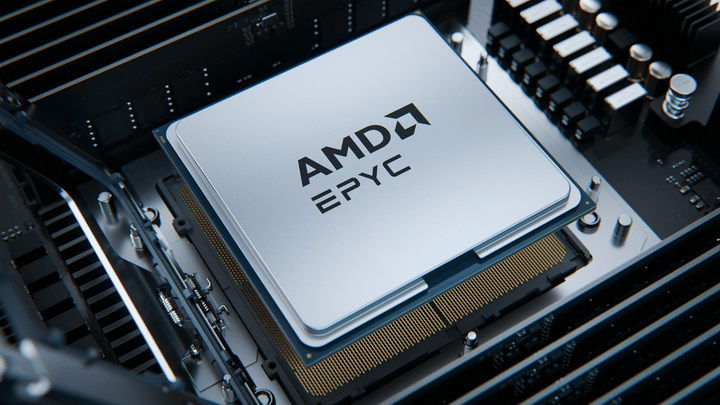
HPE launched AMD Epyc-powered ProLiant Gen13 servers for enterprise AI inference, agentic AI, and traditional workloads, targeting enterprise customers with varied AI needs.
HPE today (Oct. 7) announced the first batch of next-generation, AMD-powered servers designed to enable enterprises to run AI inference and agentic AI, as well as traditional enterprise workloads such as analytics and virtualization.
The company unveiled its first four ProLiant Gen13 servers, all powered by AMD’s sixth-generation Epyc 9006 SP7-series CPUs – code-named “Venice” – featuring new automated security and expanded management capabilities.
The new high-end ProLiant DL585a Gen13 server, which features up to eight GPUs and two AMD Venice processors, is designed for demanding enterprise workloads such as AI inference, agentic AI, retrieval-augmented generation (RAG) model fine-tuning, and analytics, the company said. The server, available in March 2027, will support GPUs from Nvidia, AMD, and Intel, said John Carter, HPE’s vice president of server product management, quality, and technical pursuit.
Related: HPE Interview: Why Data Center Efficiency Is Now Core to IT Decisions
“These are not the big [Nvidia Vera Rubin] NVL72 or AMD Helios scale-up type systems. This is for your enterprise-grade customer,” Carter said in an interview with Data Center Knowledge. “This is the first time we’ve done this kind of enterprise-grade AI system with an AMD head node. There is a lot of great performance improvements there, utilizing the larger memory bandwidth, higher-performance CPU.”
HPE also introduced three CPU-focused servers. The compact ProLiant DL525 server, available in November 2026, is a 1U, single-socket system featuring one AMD Venice chip with up to 256 cores, designed for AI inference and traditional enterprise workloads, such as virtualization, fraud detection, market data processing, modeling, and simulations, the company said.
The other two new servers, available in 2027, are CPU-based, rack-scale systems that offer high-density compute for very large enterprises or service providers, such as specialist cloud providers (often called neoclouds ) that have data-intensive AI or HPC workloads, Carter said. The ProLiant XD245 is a four-node, liquid-cooled system, while the ProLiant XD285 is a two-node, air-cooled system.
Analysts: Epyc-Powered ProLiants Aim at Enterprise AI
HPE’s server announcement signals that the company sees enterprise AI adoption on the horizon and wants to be aggressive in meeting enterprise needs, said analyst Matt Kimball of Moor Insights & Strategy. AMD’s sixth-generation Epyc chip is a strong processor for AI because of its high core count, memory capacity, and bandwidth, he added.
IDC research vice president Kuba Stolarski agreed, saying HPE’s four new servers provide organizations with a good mix of hardware for their workload needs.
Related: HPE Targets GPU Utilization With New AI Networking Portfolio
“Every enterprise is going to have a variety of different AI use cases. So you can’t have a one-size-fits-all from an infrastructure perspective,” Stolarski told Data Center Knowledge. “You can’t just put up the largest, most expensive GPU cluster and expect that’s going to be the best solution for every enterprise.”
How ProLiant Gen13 Systems Support Agentic AI Workflows
HPE executives and analysts said the three new CPU-focused ProLiant Gen13 servers can work alongside GPU-based servers for agentic AI workflows. For example, the CPU-focused servers can serve as a CPU head node in an agentic AI system, handling orchestration, tool calls, and retrieval, while GPU systems handle inference.
“You need a whole lot more CPUs to drive orchestration because these agents are making calls, and subagents are making calls. It’s just an ongoing traffic frenzy, and that’s what makes AMD’s Venice so interesting,” Kimball said. “That high core count and high single-threaded performance do a very good job of supporting orchestration for agentic AI.”
Security and Management: iLO 8 Automation and PQC Readiness
Chris Bradley, director of mainstream compute customer advocacy and technical enablement at HPE, said the ProLiant Gen13 systems will feature new automated security features as part of HPE Integrated Lights-Out 8, including support for self-encrypting drives and expanded post-quantum cryptography readiness.
Related: Discover 2026: HPE Bets on Hybrid Quantum-Supercomputing Architectures
New features in HPE Compute Ops Management software include low-touch onboarding and near-real-time power capacity insights, he said.
About the Author
Wylie Wong is a journalist and freelance writer specializing in technology, business and sports. He previously worked at CNET, Computerworld and CRN and loves covering and learning about the advances and ever-changing dynamics of the technology industry. On the sports front, Wylie is co-author of Giants: Where Have You Gone, a where-are-they-now book on former San Francisco Giants. He previously launched and wrote a Giants blog for the San Jose Mercury News, and in recent years, has enjoyed writing about the intersection of technology and sports.
Want more Data Center Knowledge stories in your Google search results?
Editor's Choice
Industry Voices
Join the entire data center ecosystem September 21 – 23, 2026, at the Gaylord Texan Resort & Convention Center in Dallas, TX.