Chips & SupplyUnited States
Nvidia Prepays KYEC to Reserve Chip-Testing Capacity in the U.S.
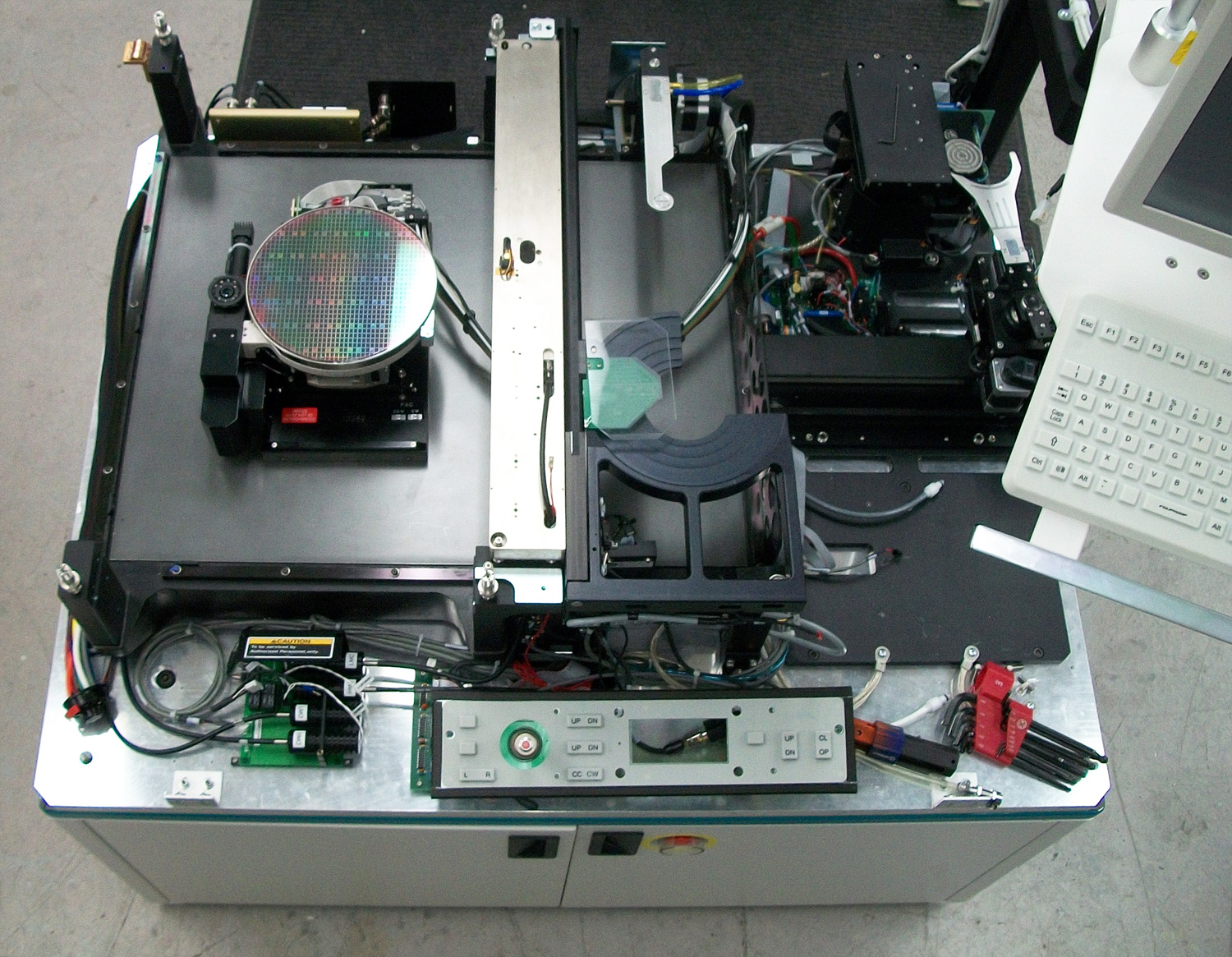
Nvidia is paying King Yuan Electronics in advance to build chip-testing capacity in the U.S. that will be reserved for Nvidia's use.
In a stock-exchange filing on Tuesday, the Taiwanese tester, known as KYEC, said its board had approved a customer prepayment agreement among KYEC, its wholly owned U.S. unit AeternZ Semiconductor Testing Corp. and Nvidia International. KYEC and AeternZ will build the capacity, reserve it for Nvidia and provide testing services. The prepayment will be offset against future service charges until it is used up.
KYEC did not disclose the size of the prepayment, saying only that the agreement would benefit its future finances and business. The same day, it canceled a $300 million guarantee its board had approved on Sept. 17 for AeternZ's obligations under the planned contract, saying the deal's structure had changed and the customer no longer required it.
The agreement is one piece of a wider Nvidia effort to move production of its AI systems onshore. In April 2025, Nvidia said it had commissioned more than a million square feet of U.S. space to build and test Blackwell chips in Arizona and AI supercomputers in Texas, and that it plans to produce up to half a trillion dollars of AI infrastructure in the U.S. within four years.
The partners span each step. TSMC makes Blackwell wafers in Phoenix, where Nvidia marked the first U.S.-made wafer in October 2025. Amkor and SPIL handle packaging and testing in Arizona. Foxconn in Houston and Wistron in Texas assemble the systems.
Prepaying suppliers has become part of the approach. In July, Amkor said Nvidia would provide a prepayment under a $1.5 billion, multiyear agreement to expand Amkor's U.S. advanced-packaging and test capacity in Arizona. KYEC's deal applies the same method to final testing, the step before chips ship to system builders.
The deal sits inside a larger plan. In July, KYEC's board approved setting up a U.S. unit and building a plant there, authorizing Chairman Hsieh Chi-chun to commit up to $1.4 billion, funded from cash or borrowing. KYEC has not disclosed the site or timeline.
KYEC said the plant supports its operating growth and global supply-chain footprint.
On April 10 the board raised 2026 capex to NT$50 billion from NT$39.37 billion, a 27% increase (Rackline calculation), citing operating needs and capacity expansion.
KYEC's revenue is growing quickly. Consolidated revenue for January through September was NT$33.48 billion, up 34.1% from a year earlier, according to its monthly filings. September revenue was NT$4.07 billion, up 24.5%. Third-quarter revenue was about NT$12.14 billion, up 9% from the second quarter (Rackline calculation).
Profitability has held up. According to KYEC's first-half financial report filed with the stock exchange, first-half revenue was NT$21.33 billion, gross profit NT$8.45 billion and operating profit NT$5.60 billion, a gross margin of about 39.6% and an operating margin of about 26.2% (Rackline calculation). Net profit was NT$4.78 billion, or NT$3.91 a share. Total assets rose to NT$128.7 billion at June 30 from NT$113.2 billion at March 31.
KYEC does not disclose how much of its revenue comes from Nvidia.
For KYEC, money up front eases the cost of financing a greenfield plant in a high-cost market. It also ties the plant's early output to one customer, concentrating risk if demand or product plans change.