Power & SitesUnited States
Data Centers Are on the Ballot. Here Are the Races and Groups to Watch
WASHINGTON, Nov. 3, 2026 Voters in Sunbury, Ohio, are deciding whether to block construction of large data centers in their community. The question comes after city leaders offered substantial tax breaks for a proposed $2 billion Amazon campus and residents raised concerns about electricity, water, noise and the area's rural character.
The Sunbury vote is one of dozens of local measures that have brought the data center boom directly to the ballot this year.
The debate has also spilled into contests for governor, the Senate and the House, as candidates seek to convince voters they will protect communities from the costs of the infrastructure powering artificial intelligence.
A local backlash becomes a statewide issue
At least 41 local measures related to data centers are scheduled for the Tuesday general election, according to Ballotpedia. Ohio accounts for 21 of them, spread across 18 jurisdictions. The measures are not all alike: Some would prohibit or restrict development, while others are advisory or would allow it.
In Sunbury, residents organized as Big Walnut for Responsible Growth gathered the signatures needed to put their proposal on the ballot. A yes vote would prohibit construction of data centers meeting the measure's definition of a large facility. The proposed Amazon campus had already been put on hold under a city moratorium.
Helping organize similar efforts across Ohio is Conserve Ohio, a political committee founded by Republican Nick Owens and Austin Baurichter, a left-leaning independent. The group helped put proposed charter amendments banning large data centers on the ballot in 10 Ohio towns, according Politico feature highlighting the “strange bedfellows” nature of their alliance.
Concerns about farmland, local decision-making and electricity bills have brought together people who disagree on many other questions.
Ohio, where data center races matter
In Ohio's Senate race, Democrat Sherrod Brown has made the issue a feature of his challenge to Republican Sen. Jon Husted.
A Brown campaign advertisement promised to require data centers to pay the full cost of their electricity rather than shift expenses to households. Husted has pointed to Brown's past support for data center development and introduced a bill intended to encourage state regulators to protect other electricity customers from costs associated with large new power users.
The bill fell short of advancing in the Senate – a widely perceived action by Democratic Minority Leader Chuck Schumer to dampen Husted's reelection prospects.
“The bill is a fraud, plain and simple,” Schumer said after his Democratic colleagues denied a motion to bring a bill that passed the House in September on a 417-3 vote.
The state's race for governor has produced attacks in both directions. Democrat Amy Acton has called for a conditional pause on new data centers until requirements covering energy, environmental standards, community agreement and other issues are addressed.
Republican Vivek Ramaswamy has opposed property tax breaks for data centers and said projects should provide their own energy and benefit local communities. An outside group supporting him also aired an advertisement criticizing Acton over investments in technology companies.
In northeastern Pennsylvania, Democrat Paige Cognetti has targeted data centers in her campaign against Republican Rep. Rob Bresnahan in the state's 8th Congressional District. Both candidates have emphasized local control, though they have attacked each other's records and proposals.
About $173 million has been spent on election campaigns about data centers, according to advertising tracker AdImpact. Almost all are negative, about $95 million of that total was concentrated in Ohio, Michigan, Wisconsin and Pennsylvania.
The groups and money behind local fights
The spending is also visible in smaller communities, where a single proposed project can become the subject of a costly ballot campaign.
In Oregon, Ohio, near Toledo, Vantage Data Centers gave $250,000 to Opportunity on the Bay, a committee opposing a proposed restriction. Four union groups contributed another $85,000 to a separate group opposing the measure. Together, opponents had raised $335,000, while supporters had raised $4,600, according to a Cleveland.com report on Oct. 25.
In Sunbury, the technology trade group NetChoice circulated door hangers urging residents to vote against the proposed amendment, according to the report.
Supporters of development point to investment, tax revenue and construction jobs. At a Broadband Breakfast Live Online event in May, INCOMPAS CEO Chip Pickering argued that the build-out could bring infrastructure and economic opportunity to rural America.
Alternative community approaches on data centers
A different approach has emerged in Port Washington, Wisconsin. In April, voters approved a measure requiring public approval before the city offers tax incentives for future projects worth more than $10 million. Great Lakes Neighbors United helped organize the effort amid debate over a proposed OpenAI and Oracle data center. The measure was not a blanket ban on data centers.
Other communities have gone further. In June, voters in Monterey Park, California, a Los Angeles suburb, backed a permanent citywide ban on data centers with more than 86 percent of the vote, the first such ban in the nation enacted by public vote. And in Festus, Missouri, the backlash played out in a council election: In April, voters removed every incumbent up for reelection after officials supported a $6 billion, 360-acre data center.
The underlying dispute is not always whether a community should accept technology investment, but what terms it should demand. At the May Broadband Breakfast event, AI Policy Forum CEO Alex Roark argued that communities should define the value they receive and set clear rules for incoming projects.
Roark will be among the participants in a Broadband Breakfast Live Online event on Wednesday, Nov. 4: Reaction to Midterm Elections for Broadband and AI.
Looking toward 2028
The data center debate is part of a larger political fight over AI, though the two should not be confused. Local ballot campaigns focus on physical infrastructure and its costs. Other organizations are seeking to influence how AI itself is governed.
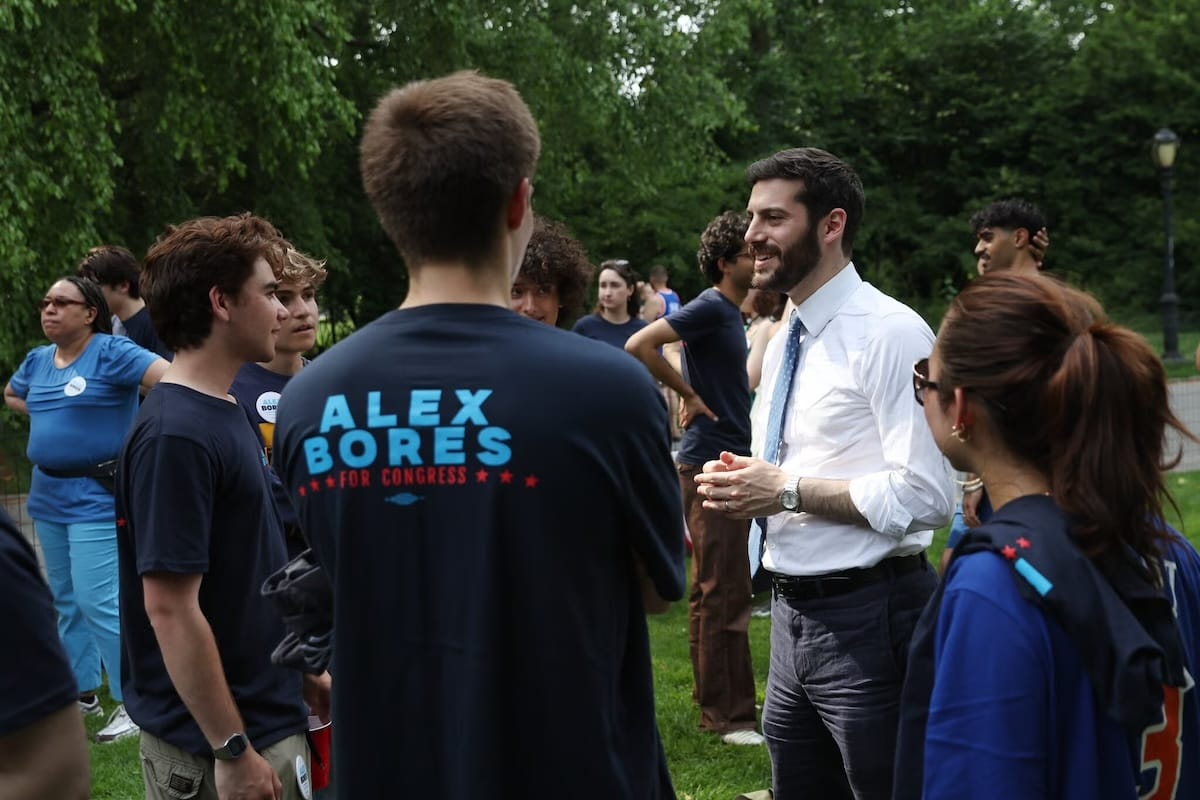
One such effort is Who Decides, founded by New York Assemblymember Alex Bores and organizer Anna Myers. The group aims to build a Democratic coalition around AI safety and organize in early presidential primary states ahead of 2028. Its leaders said they had raised $10 million and hoped to raise another $20 million.
Tuesday’s election offers a preliminary test of how voters respond to data center and AI in political campaigns.
Broadband and AI in the Next Congress
Breakfast Club Members take an additional $100 off!