Power & SitesUnited States
How Carbon-Aware Scheduling Can Cut Data Center Emissions
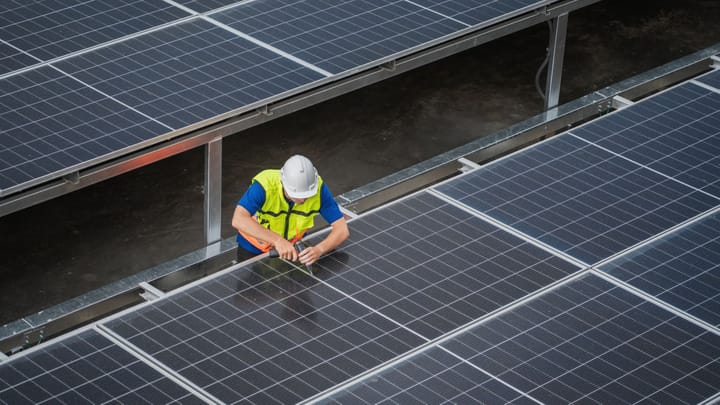
Aligning flexible workloads to cleaner hours and locations turns variability into measurable Scope 2 reductions.
Data centers are often described as having fixed carbon footprints tied to their size and grid mix. In practice, operators can lower emissions by aligning flexible workloads with periods and locations where electricity is cleaner.
This “carbon-aware” approach complements long-term renewable procurement and efficiency programs, creating a practical pathway to reduce Scope 2 emissions and to demonstrate progress toward 24/7 carbon-free energy objectives. It also helps address growing regulatory expectations and stakeholder scrutiny of digital infrastructure’s electricity demand.
What Is Carbon-Aware Computing?
Carbon-aware computing is the practice of scheduling compute-intensive but time-flexible tasks – such as data backups, batch analytics, AI model training, report generation, and non-urgent patching – during windows when grid carbon intensity is lower or when on-site renewable or stored energy is available.
Related: After the AI Rush, Can Data Centers Reclaim Sustainability?
The core idea is to compare the emissions profile of running a workload at one time or place versus another, and then choose execution options that minimize emissions within operational constraints.
How Carbon-Aware Scheduling Works
Electricity grids are dynamic. Solar production peaks during daylight, wind output varies seasonally and hourly, and some regions benefit from geothermal, hydro, or nuclear baseload. Grid conditions change by the hour based on demand, transmission constraints, and market dispatch. As a result, the emissions intensity of a kilowatt-hour can swing significantly across a single day.
Carbon-aware computing takes advantage of this variability by aligning flexible workloads with periods when low-carbon energy is most available. Operators assess which workloads can shift in time or location without violating service-level agreements (SLAs), latency requirements, data residency constraints, or change-control policies. The outcome is a set of scheduling policies that favor cleaner windows while maintaining service objectives. That way, compute-hungry tasks can run without forcing incremental demand at higher-emitting hours.
Implementation Realities: Data, Forecasts, and Constraints
The principles behind carbon-aware computing are simple enough. In a data center context, however, implementing carbon-aware strategies can be challenging for a few key reasons. Common hurdles include limited observability into tenant workloads (particularly in colocation facilities ), difficulty predicting workload power draw due to dynamic CPU/GPU utilization and I/O patterns, and uncertainty in renewable forecasts.
Related: Do Data Centers Cause Air Pollution? It Depends on Power.
Additionally, not all workloads are flexible. Mission-critical, latency-sensitive applications may be fixed in time and location.
A practical approach starts with cataloging workloads by flexibility class, power profile, and compliance constraints. From there, operators can pilot carbon-aware scheduling on clearly deferrable tasks.
What Operators Can Do Today
Effective carbon-aware programs typically include:
Instrumentation and metering. Enhance power telemetry at the rack and cluster level to identify high-draw, schedulable workloads and measure realized emissions impacts.
Behind-the-meter resources. On-site renewables improve certainty that incremental workload energy is low-carbon. Generic utility grids typically can’t guarantee that the energy they supply comes from any particular source. However, data centers with their own solar, wind, or geothermal energy supplies can do this. When paired with batteries, operators can time-shift energy and shave peaks. While few sites can economically size batteries to cover full facility load, modest storage can be sufficient to power energy-intensive, deferrable tasks during clean windows.
Reduce Emissions, Keep Reliability
Perfect optimization is unrealistic for most data center environments. Even so, carbon-aware computing can deliver real reductions by capturing the “clean hours” that already exist on many grids. Over time, it becomes another reliability-minded tool – one that lowers emissions while respecting the operational realities that keep data centers running.
Related: Low-Frequency Noise and Data Centers: What to Know
About the Author
Christopher Tozzi is a technology analyst with subject matter expertise in cloud computing, application development, open source software, virtualization, containers and more. He also lectures at a major university in the Albany, New York, area. His book, “For Fun and Profit: A History of the Free and Open Source Software Revolution,” was published by MIT Press.
Want more Data Center Knowledge stories in your Google search results?
Editor's Choice
Industry Voices
Join the entire data center ecosystem September 21 – 23, 2026, at the Gaylord Texan Resort & Convention Center in Dallas, TX.