Power & SitesUnited States
Early Community Engagement Becomes Critical as Data Center Opposition Grows
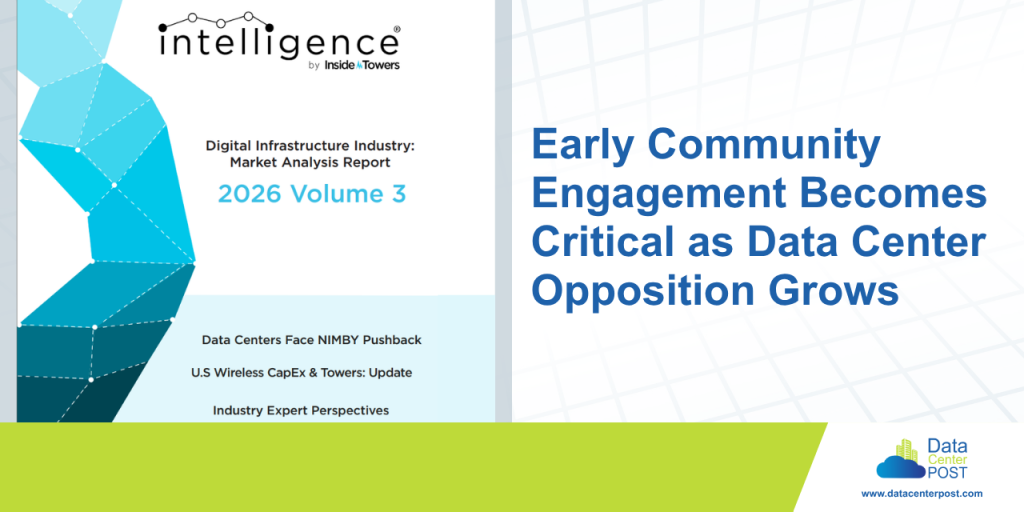
More than 1,500 new data centers are in various stages of development across the United States, but growing community opposition is changing how projects move forward. According to Inside Towers Intelligence’s 2026 Volume 3 Digital Infrastructure Industry: Market Analysis Report, concerns about electricity costs, energy and water use, environmental impacts, and artificial intelligence are driving greater public scrutiny of proposed developments.
Public resistance is widespread. A Gallup poll conducted in March 2026 found that seven in ten Americans opposed data center construction in their local communities including more than half who strongly opposed it. Environmental concerns are particularly significant with 55% of U.S. adults saying they worry a great deal about data centers’ environmental impact and another 23% expressing a fair amount of concern.
Government officials are responding with a growing patchwork of regulations, moratoriums, and bans. Several states have considered restrictions on new developments, while numerous municipalities have enacted or explored local pauses. These actions are already affecting project timelines and encouraging developers to reevaluate their site-selection and community-engagement strategies.
As opposition increases, early community outreach is becoming a prerequisite for development. Instead of securing land, power, fiber, and water before speaking with residents, developers are increasingly engaging local leaders and communities earlier in the planning process. These conversations allow companies to explain their projects, address local concerns, and identify benefits that can be delivered to the surrounding area.
Several developers are pairing transparency with tangible community investments. Examples highlighted in the report include support for schools, roads, workforce-development programs, and environmental initiatives. Duos Edge AI also hosts open houses and guided facility tours that allow residents, educators, officials, and businesses to see its modular edge data centers and ask questions directly about their size, cooling systems, and electricity requirements.
Clearer communication will remain central as the industry responds to concerns about power, water, jobs, and the environment. Ilissa Miller, CEO of iMiller Public Relations, recommends approaching community engagement more like an election campaign than a traditional project-marketing effort. She also advocates for engaging communities before filing conditional-use applications and providing clear information about what developers can offer at each stage of the process.
The report indicates that responsible development will increasingly depend on transparency, thoughtful planning, and measurable community value. Operators that engage early, correct misinformation, and work constructively with residents and local officials will be better positioned to move projects forward. Explore the Inside Towers Intelligence report for additional insights into the community and regulatory pressures shaping data center development.