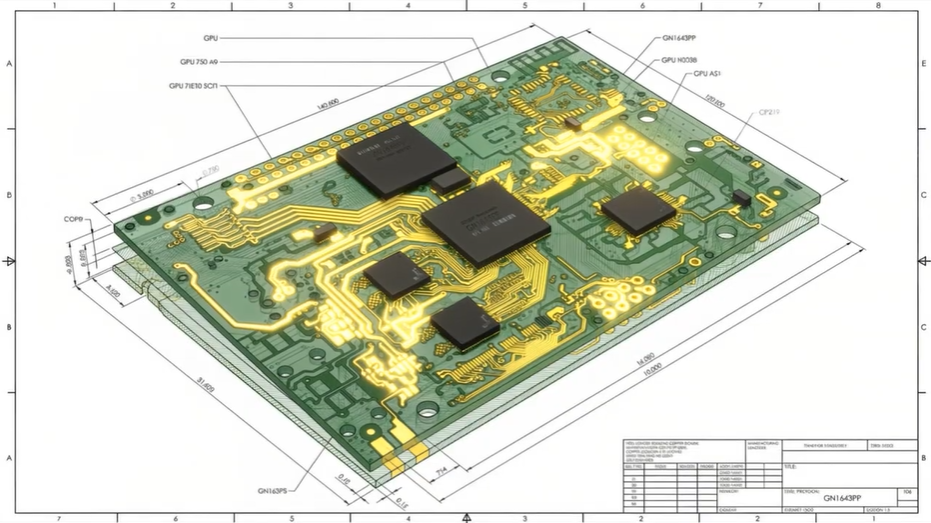
Vinci4D Inc. today announced that it has closed a $250 million funding round at a $1.5 billion valuation.
Advent, Temasek and Xora jointly led the Series B deal. They were joined by several startup funds including AMD Ventures.
Hardware engineers use simulations to find issues in their product designs. For example, a car designer might simulate fog to evaluate the impact of adverse weather on a vehicle sensor. Historically, setting up simulations required highly specialized skills and a significant amount of time. As a result, many hardware teams only use the technology intermittently.
Palo Alto, California-based Vinci is looking to change that. Its namesake software platform can run simulations after every major change to a product blueprint. If engineers run a simulation the day after a design change rather than two weeks later, they can detect issues that much faster. That lowers product development times.
Vinci’s initial focus is speeding up chip projects. In particular, the platform helps engineers simulate the thermal properties of processors, memory modules and interconnects. A chip team could, for example, study whether a graphics card might overheat when it operates near its peak frequency.
Vinci is powered by a physics-focused artificial intelligence model. Developers can upload a CAD drawing of a chip, input certain related data and have the AI automatically turn it into a simulation.
One of the most time-consuming tasks involved in simulation projects is meshing. That’s the process of breaking up a product blueprint into numerous small, three-dimensional shapes. That step is necessary because a large array of small shapes can be processed much faster than a continuous surface such as a chip.
Vinci performs meshing automatically. From there, it uses custom graphics card kernels to speed up convergence, which is the process of finalizing simulation calculations. Kernels are the low-level software modules that make up an AI model.