Power & SitesUnited States
Palisades proposes method to retrieve 'tipped nuclear fuel assembly', but concerns remain
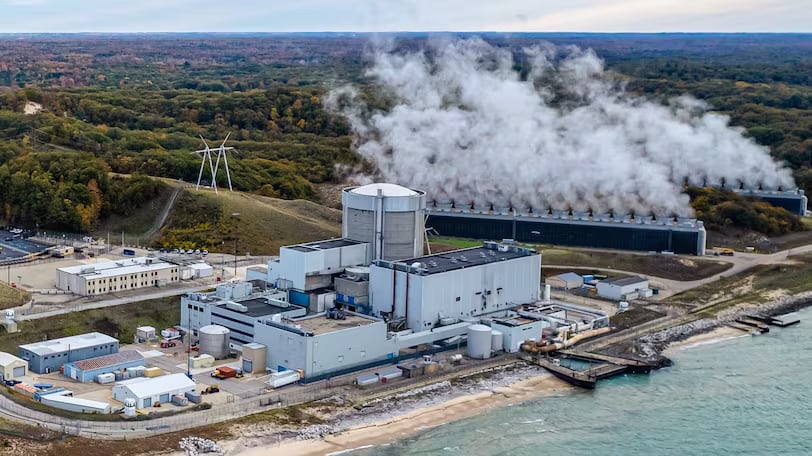
A battle is brewing over how to retrieve a tipped fuel assembly at the soon-to-be-restarted Palisades nuclear reactor in Michigan.
The reactor, which closed in 2022 but was purchased by Holtec International, has become a poster child for an AI and data centre-induced nuclear energy renaissance in the US.
Efforts to restart the reactor in Covert, Michigan, hit a snag on August 30, when, according to the US Nuclear Regulatory Commission (NRC), one of the fuel assemblies tipped during fuelling, causing resumption to be placed on hold. The NRC said no radiation was released during the incident.
But the incident has confirmed concerns about the unorthodox nature of restarting a shuttered nuclear reactor, which are known as “ zombie reactors ”. According to publicly available documents and correspondence between Palisades workers and the NRC, Holtec International has proposed a method for retrieving the tipped fuel.
In the requests Holtec made to the NRC, the company says that the fuel rods have “retained their integrity as primary fission product barrier”. The energy firm also says that the fuel assembly is situated at a 30-degree angle “from the core plate”.
In its application, Holtec proposed using a specially designed recovery tool to lift the tilted assembly and a protective canister to support and enclose it during its transfer from the reactor vessel to the spent fuel pool.
A news release on Friday from the environmental advocacy group Don't Waste Michigan, however, expressed distrust in Holtec. “This has never been done anywhere, and Holtec has never operated a nuclear power plant,” the non-profit said. The NRC has not yet indicated if it will grant approval to Holtec's proposal.
“The peril of Palisades's fuel retrieval is that highly irradiated fuel will be suspended out of water in the plant atmosphere for up to 133 hours,” Don't Waste Michigan alleges. “This will be a highly radioactively contaminated undertaking.”
Yet in Holtec's licence amendment request, provided to the NRC on September 30, the company insists that everything will be done according to regulatory limits. “There is no significant increase in the probability of an accident,” the document reads.
Shortly after confirming the tipped fuel assembly incident several weeks ago, Holtec said that the reactor's fuel loading had been paused while the company addressed the situation, but that other restart efforts “not dependent on resolution of the fuel-loading matter” were still under way.
Despite both the NRC and Holtec confirming that no radiation was released, critics of the Palisades restart often point to the reactor's history of controversy. Before it was bought by Holtec, a 2012 NRC report warned about the work culture at Palisades, where it said safety concerns were often dismissed.
In 2016, security staff at the reactor were placed on leave from the plant, which was then owned by Entergy, for failing to properly follow fire-prevention protocol. A little more than a year ago, a worker at Palisades fell off a refuelling bridge into a pool of water, though they were not seriously injured.
Arnie Gundersen, a nuclear engineer and expert adviser for Don't Waste Michigan, said that there are plenty of reasons to be concerned about Holtec's efforts to restart the reactor. “It is clear that they want approval to remove the tilted fuel bundle because they want to expedite the refuelling,” he claimed.
“They provide no root cause analysis as to how the event happened in order to assure that it cannot happen again. nor have they evaluated any damage within the reactor that the fuel bundle may have caused.”
Holtec, however, has previously said that the company is working to figure out why the fuel assembly tipped. “A root cause evaluation has been initiated to determine the cause of the event,” a statement read. It also promised to implement any corrective actions necessary.