Power & SitesUnited States
Why Data Center Scale Is Raising the Stakes for Project Delivery
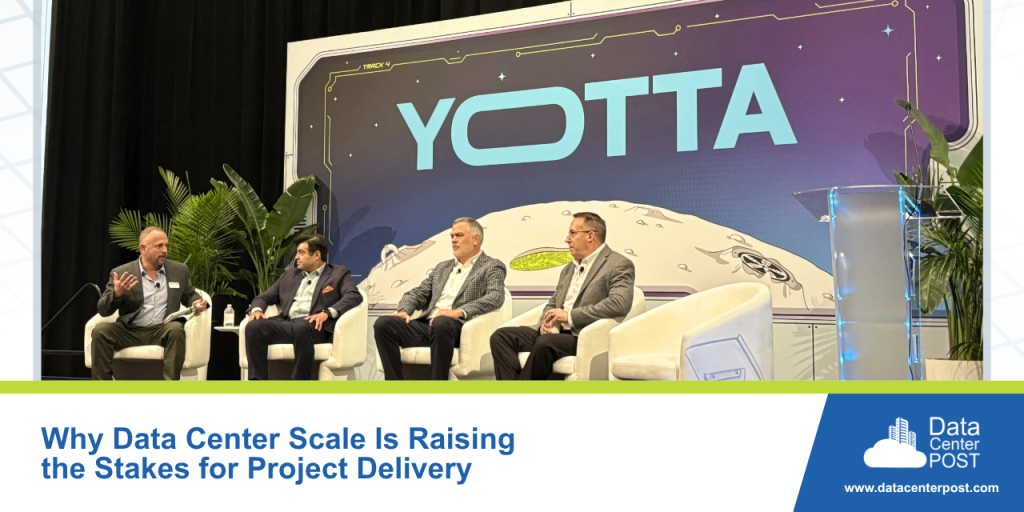
Data center development has always been complex, but what has changed is the scale.
During a recent Yotta panel, Dr. Atif Ansar, Executive Chairman and Co-Founder of Foresight, alongside industry leaders, discussed how projects are becoming larger, denser and more technically demanding while many of the resources required to deliver them have not expanded at the same pace. Skilled labor remains constrained, power is increasingly difficult to secure, equipment lead times remain significant and infrastructure requirements continue to evolve.
As a result, the consequences of a missed milestone are growing. A delay rarely stays isolated to one part of a project. It can ripple across contractors, suppliers, customers, financing and future capacity.
Complexity Is Increasing Faster Than Delivery Capacity
Not long ago, a 100 or 150 MW data center represented significant scale. Today, the industry is developing campuses measured in hundreds of megawatts and even gigawatts. Rack densities are also climbing rapidly, while direct liquid cooling and other new infrastructure requirements are reshaping facility design.
Meanwhile, the labor pool has not grown at the same rate as construction demand. Supply chains and power availability add further pressure.
This leaves less room for delays, design changes or slow decision-making.
Managing the Entire Delivery Chain
Data center schedules extend well beyond construction. Land, power, design, procurement, manufacturing, logistics, commissioning and customer readiness all contribute to the final ready-for-service date.
Panelists discussed how vertical integration, modular construction and offsite manufacturing can help reduce field labor and provide greater control over schedules. But improving delivery also requires stronger coordination between owners, contractors, customers and suppliers.
For owners, that does not mean managing every detail of construction. It means maintaining visibility into the milestones that matter and understanding what needs to happen today to protect a delivery date months into the future.
Time Has a Direct Financial Impact
The consequences of delay extend beyond construction costs. Facilities that come online late can face lost revenue, contractual penalties, increased financing costs and delayed customer capacity.
During the panel, Dr. Atif Ansar illustrated the potential impact using a 100 MW data center, estimating approximately $20 million in monthly revenue exposure before additional delay-related costs are considered.
That makes early visibility critical. The sooner teams identify schedule risk, the more opportunity they have to adjust resources, resequence work or coordinate with customers and suppliers.
Delivery Certainty Is Becoming a Competitive Advantage
The industry cannot eliminate uncertainty. Technology will continue to evolve, labor and power constraints will remain, and supply chains will face disruption.
The opportunity is to manage those challenges earlier and more effectively.
Successful delivery will increasingly depend on shared visibility, faster decision-making and stronger alignment across the project ecosystem. At this scale, time deserves the same discipline and attention organizations already give to capital.