Power & SitesUnited States
Data Center Power Demand to Grow 24% Annually by 2030: McKinsey
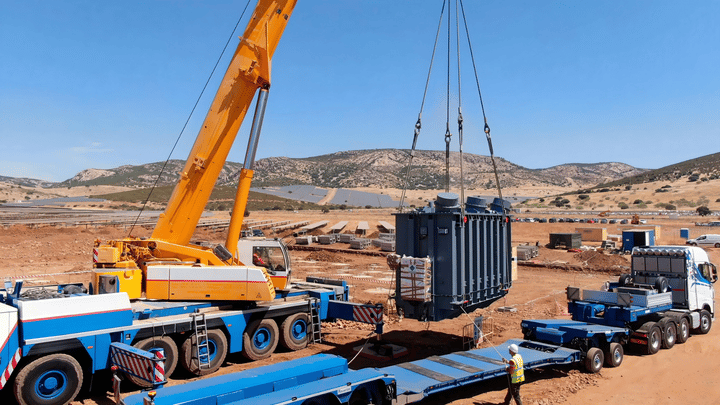
Power constraints are pushing operators toward on-site generation, but uncertainty beyond 2030 raises questions about how much infrastructure to build.
Data center electricity demand could grow at a compound annual rate of 24% through 2030, but the availability of power infrastructure will determine how much computing capacity developers can bring online, according to McKinsey’s Global Energy Perspective 2026.
The projection places data centers among the most consequential sources of new electricity demand while highlighting uncertainty over how that demand will evolve beyond the decade.
For developers, the immediate challenge is securing sufficient power to meet computing requirements. Longer-term investment decisions must also account for improvements in AI efficiency and the possibility that demand develops differently than anticipated.
“From now to 2030, our most likely scenarios all have power supply lower than IT compute demand,” Sam DeFabrizio, a partner at McKinsey, told Data Center Knowledge.
Power Supply Sets the Pace
McKinsey’s projections combine monthly tracking of CPU and GPU purchase commitments and hyperscaler capital spending announcements with assessments of how quickly power infrastructure can be delivered.
On the supply side, the model considers interconnection approvals, permitting, moratoriums, transformer lead times, and the availability of turbines, reciprocating engines, and fuel cells. Engineering, procurement, and construction capacity is another limiting factor.
Faster expansion would require improvements across those constraints, rather than a stronger demand for computing alone. DeFabrizio said greater construction and turbine manufacturing capacity, alongside faster interconnection approvals and permitting, could allow power supply to grow more quickly than expected.
Conversely, limited construction capacity or stronger-than-expected efficiency gains could pull electricity demand below the baseline. Those gains could come from AI models, data center buildings, or greater flexibility in when computing workloads consume power.
The report’s broader conclusion is that inexpensive generation cannot support electrification unless transmission, storage, and reliable capacity are ready to deliver it.
On-Site Generation Adds Speed and New Bottlenecks
Developers seeking faster access to power are turning to gas engines and turbines, fuel cells, and battery storage. Those options can reduce dependence on utility construction schedules, but they introduce infrastructure requirements of their own.
“Natural gas is often viewed as the fastest path to adding firm power capacity and generation, but competition for pipeline infrastructure could cause delays in building gas-powered generation,” DeFabrizio said.
That applies to both generation supplying the grid and facilities operating behind the meter. Projects requiring redundant pipeline connections to meet reliability requirements face additional complexity.
Locating closer to gas-producing basins can reduce the need for new pipeline infrastructure, DeFabrizio said. Securing rights-of-way for pipeline construction can otherwise be difficult within the short development schedules that operators are targeting.
Battery storage offers another way to manage electricity costs and improve flexibility. However, DeFabrizio cautioned that storage introduces reliability trade-offs when not paired with generation.
Grid Connections Still Matter
On-site power does not necessarily mean a permanent departure from the grid. DeFabrizio said more than 60% of operators now view their strategy as combining on-site generation with grid access.
“Eventually, many data centers that build on-site generation will retain it post-grid connection, becoming flexible grid assets,” he said.
Under that approach, generation initially installed to power a facility could later provide backup and occasional support once utility service becomes available. Running those assets less frequently could reduce local emissions while preserving reliability.
DeFabrizio said he also expects a more diverse supply mix beyond 2030. Growing demand and additional grid connections could support expanded solar and wind development, sometimes paired with batteries or other storage technologies.
Integrating data center loads into the wider system, he argued, provides opportunities to spread the benefits of investment beyond individual campuses.
Planning Beyond the Current Boom
For data center developers and utilities, an approach considering multiple energy futures will become particularly important after 2030, when the demand pipeline is less certain.
DeFabrizio suggested developers align capital deployment with indicators of market evolution, negotiate contractual protections with creditworthy customers, and maintain a portfolio of power solutions that can support the grid.
He noted community engagement also belongs in that planning process, emphasizing the need to ensure local benefits outweigh potential burdens, alongside managing construction, contractual, and demand risks.
From DeFabrizio’s perspective, it will be critical for developers to secure scarce power quickly enough to meet near-term computing demand while retaining options if efficiency improvements or changes in AI adoption alter the longer-term outlook.
“The leaders across the value chain will likely be those who combine early access to scarce power resources with thoughtful risk management,” he said.
About the Author
Nathan Eddy covers data center trends and technologies across multiple industries. A graduate of Northwestern University’s Medill School of Journalism, he is also a documentary filmmaker specializing in architecture and urban planning. He currently lives in Berlin, Germany.
Want more Data Center Knowledge stories in your Google search results?
Editor's Choice
Industry Voices
Join the entire data center ecosystem September 21 – 23, 2026, at the Gaylord Texan Resort & Convention Center in Dallas, TX.