Chips & SupplyUnited States
Micron folds over Netlist memory patent dispute
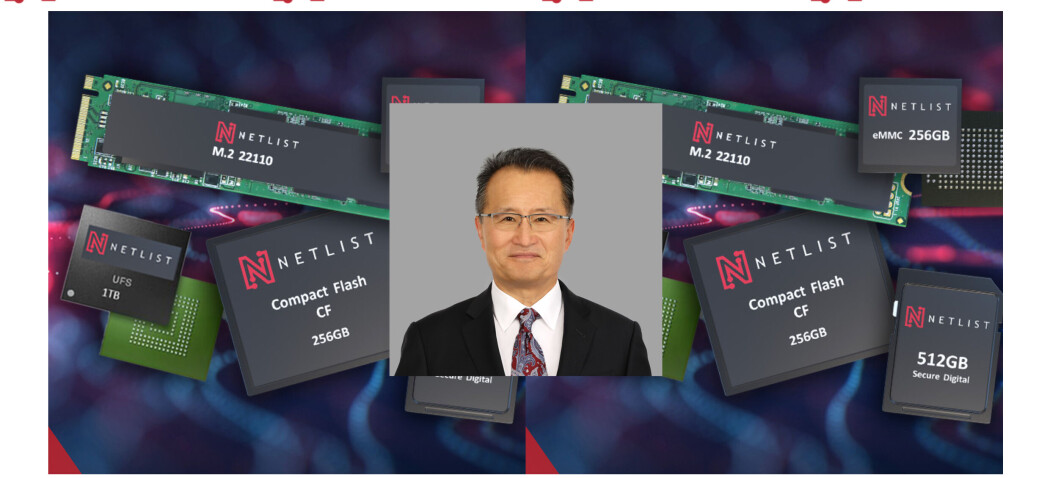
Micron and Netlist have settled their patent litigation with Micron signing a 5-year license for Netlist memory IP, and paying $600 million in license fees.
The payments involve Micron paying Netlist $30 million a quarter until the third quarter of 2031, and Micron has also bought $1 million of Netlist’s common stock. Netlist has now won IP disputes against Micron, Samsung and SK hynix over its memory technology, gaining fees valued at $1.54 billion.
Netlist founder, chairman, president and CEO Chun K. (Chuck) Hong said: “The agreement with Micron further validates the value of our AI memory technologies. We remain committed to protecting our IP while continuing to invest in the development of next-generation products.”
In August this year, Samsung agreed to pay Netlist $897 million over 5 years in licensing fees for Netlist server DIMM and High Bandwidth Memory technologies just 3 months ago, and became a Netlist shareholder, buying 10 million shares of Netlist common stock for $1 million. The licence fee payments involved an upfront patent license fee of $239 million (about $200 million net of Korean withholding tax), plus quarterly payments of up to $32.9 million gross through to the second quarter of 2031.
It also gave Netlist the right to purchase up to $1.5 billion of DRAM and NAND products over five years.
In April 2021 Netlist prevailed in a patent infringement lawsuit against SK hynix, winning a $40 million settlement, a cross-licensing deal and a supply arrangement.
Netlist has an outstanding legal case against Google since 2008 over U.S. Patent No. 7,289,386, covering rank multiplication in memory modules.
Netlist was founded in 2000 and is based in Irvine, CA. It provides high-performance modular memory subsystems to the world’s premier OEMs, manufactured in wholly owned, ISO- and OSHAS-certified manufacturing and testing facilities in Suzhou, China. Netlist also builds NVMe SSDs. Netlist holds a portfolio of patents, many seminal, in the areas of hybrid memory, storage class memory, rank multiplication and load reduction, among others.
It went public on Nasdaq in November 2006 and has been largely loss-making since then.
Revenue peaked near the IPO, collapsed after 2008, and bottomed at about $8 million in 2015. The 2021–22 jump included the SK hynix license payment plus stronger product sales; 2023 dropped again before recovering in 2024–25. Through the first half of 2026, quarterly sales were about $105 million and $110 million, so the full year is already ahead of 2025 but is not complete. The August and October 2026 Samsung and Micron license payments are not in the 2006–2025 totals.
Losses widened in 2022–2024 on weak product margins and heavy litigation costs, then narrowed in 2025. The first half of 2026 was profitable (about $8.6 million in the first quarter and $1.4 million in the second), before the larger Samsung and Micron license payments.