Power & SitesUnited States
Mission-Critical Specialization: Tailoring Fuel Systems for Data Centers and Hospitals
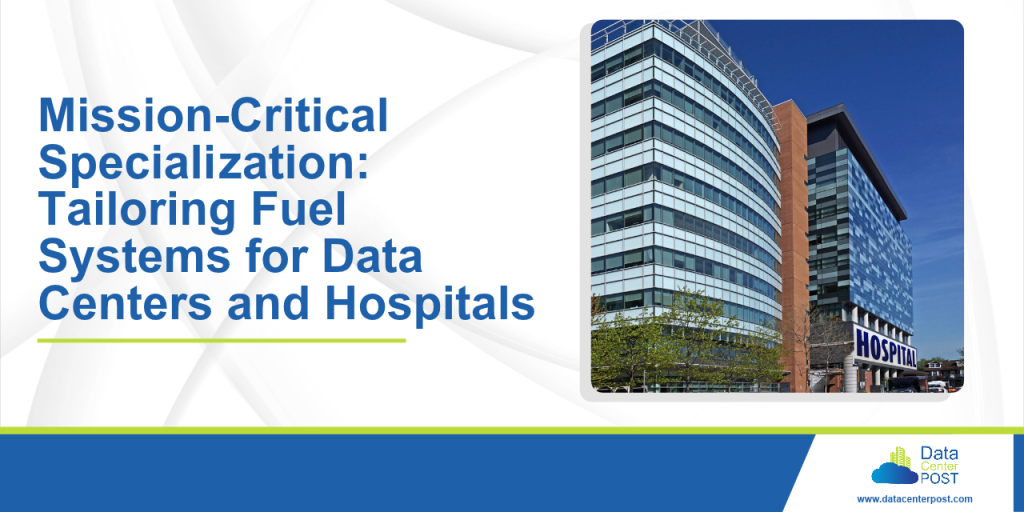
“Mission critical” describes many types of facilities, but it does not describe a single operating environment. A data center protecting digital infrastructure and a hospital supporting patient care may both depend on standby generators during a power interruption, yet their facilities, operating priorities, emergency procedures, and infrastructure constraints can be very different.
Those differences should influence how the fuel system is engineered and managed. Mission-critical fuel infrastructure cannot be treated as a standardized equipment package that is applied the same way from one facility to the next. The system has to reflect the environment it supports, the demands placed on the generators, and the consequences if standby power does not perform as expected.
For ESI Total Fuel Management, this is a central part of mission-critical specialization. ESI is purpose-built for environments where fuel-related generator failure is not an acceptable outcome, including data centers, hospitals, utilities, financial institutions, and government infrastructure. Its approach is centered on understanding the application first, then engineering and supporting the fuel system around the operational needs of the facility.
Data Centers: Designing for Scale, Growth, and Consistency
Data center fuel systems often have to support infrastructure at considerable scale. As facilities grow, the challenge is not simply storing enough fuel. Fuel must be received, maintained, monitored, distributed, and delivered to generators in a way that supports the facility’s critical power strategy.
That requires the individual parts of the system to function together. Bulk tanks, day tanks, fuel transfer equipment, receiving infrastructure, monitoring technology, and generator supply systems all contribute to the same operational objective. ESI’s approach reflects this interconnected relationship by managing fuel quality, storage, distribution, and generator supply as part of a unified system rather than as isolated components.
Scale also introduces the need for consistency. Operators managing several facilities may want common engineering standards and a repeatable approach to fuel system performance across different locations. At the same time, repeatability should not mean designing every site identically. Tank configuration, generator requirements, site access, local conditions, and facility design can vary significantly.
Hospitals: Engineering Around the Demands of Continuity of Care
Health care facilities place a different set of demands on standby power infrastructure. A hospital must be able to maintain essential operations through a power disruption while continuing to function as an active care environment.
That changes the context in which a fuel system is designed. Existing tankage, facility layout, available space, delivery routes, and emergency access may all place constraints on what can be installed and how fuel can move through the site. A system may need to integrate with infrastructure that has been operating for years rather than being designed as part of a new campus.
Regulatory considerations are also part of the operating environment. ESI’s fuel assurance model incorporates fuel handling, storage, and usage into an approach intended to support operational readiness, regulatory requirements, and audit confidence.
Emergency fuel access deserves similar consideration. Extended outages, severe weather, and grid instability can create conditions in which normal fuel deliveries become more difficult. ESI identifies disaster preparedness and emergency fuel access as important elements of mission-critical fuel management, helping facilities account for conditions that may extend beyond the capacity of their on-site storage.
Specialization Continues Throughout the Life of the System
A tailored fuel system should not become static once it is commissioned. Mission-critical facilities change over time as infrastructure expands, equipment ages, loads evolve, and operating requirements change.
Those changes can alter how the fuel system performs and what the facility requires from it. A data center may add capacity and generators. A hospital may renovate or expand existing infrastructure. Both may face changes in compliance requirements or emergency planning expectations.
ESI’s model addresses fuel-related performance across the lifecycle rather than treating installation as the end of the process. Systems can be evaluated, maintained, monitored, and optimized as operating conditions change. This reflects ESI’s broader position that mission-critical reliability depends on ongoing accountability rather than equipment performance at commissioning alone.
Operational intelligence can also help facilities compare original assumptions with actual system behavior. Insight into consumption, fuel condition, and system performance gives operators a clearer basis for evaluating readiness as the facility evolves.
Mission-Critical Specialization Is About Understanding What the Facility Protects
ESI approaches fuel as a performance-critical part of mission-critical infrastructure. By combining engineering expertise with lifecycle accountability and operational insight, ESI can tailor fuel systems around the specific requirements of the environments they are designed to support.
For data centers and hospitals alike, the goal is not to make every fuel system the same. It is to make each system appropriate for the mission it serves.