Power & SitesUnited States
AEP Plans $4 Billion, 702 MW Fuel-Cell Power Project for Google
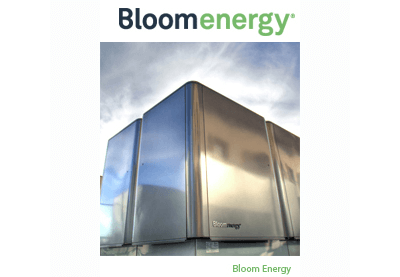
American Electric Power (AEP) plans to invest approximately $4 billion in a 702 MW Bloom Energy fuel-cell project near Cheyenne, Wyoming, supported by a 20-year power purchase agreement with Google. The project will be developed through Cheyenne Fuel Cell, LLC, approximately 92% owned by AEP and nearly 8% held by funds advised by Basalt Infrastructure Partners. Construction is planned for 2026, with full operations targeted by the end of 2028.
The installation extends AEP’s infrastructure development beyond its traditional utility service territory and demonstrates how hyperscalers are pursuing dedicated generation as AI data center demand grows.
AEP + GOOGLE $4 BILLION PLANNED FUEL-CELL INVESTMENT
Schedule — Construction 2026; full operation end-2028
WHY IT MATTERS Long-term hyperscaler electricity procurement is supporting large-scale deployment of distributed fuel-cell generation.
Analysis: Fuel Cells Become a Strategic Option for Hyperscale AI Power
The AEP-Google agreement illustrates how AI infrastructure is reshaping electricity procurement. Hyperscalers are increasingly pursuing dedicated generation to address rising compute loads and long transmission-development timelines. At 702 MW, the project brings fuel cells to a scale more commonly associated with conventional power plants. For AEP, it extends development beyond its regulated utility footprint. Its previously disclosed $2.65 billion fuel-cell procurement commitment and broader $78 billion 2026–2030 capital plan illustrate the scale of investment directed toward large electricity customers.
Bloom Energy’s solid oxide fuel cells generate electricity electrochemically rather than through conventional combustion, providing continuous output with comparatively low local air-pollutant emissions. They are not inherently carbon-free when fueled by natural gas, making proposed carbon capture integration important to the project’s environmental objectives. Google’s wider energy strategy includes renewables, geothermal, nuclear and other firm power resources, reflecting the need for multiple technologies to supply round-the-clock data center demand.
The 20-year PPA provides long-term demand visibility for AEP while allowing Google to secure electricity without directly owning the plant. Nevertheless, the $4 billion project carries construction, fuel supply, equipment, grid integration, maintenance and financing risks. Its economics will be tested against conventional gas generation and other firm-power alternatives. Key milestones include construction progress, carbon capture integration and delivery of the full planned 702 MW by the end of 2028.
🌐 We’re tracking AI infrastructure and data center power developments on Converge Digest.