Chips & SupplyUnited States
Microsoft N1Xes Intel in favor of Nvidia's shiny new SoCs in Surface Laptop Ultra
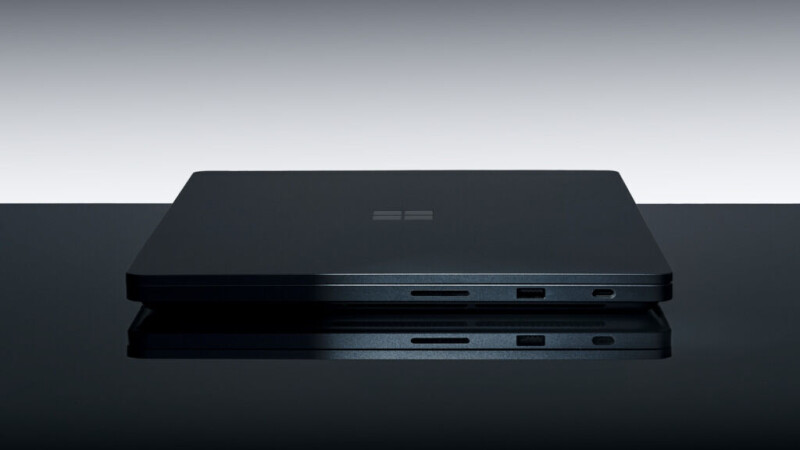
Poverty-spec model starts at $2,599 with 24 GB of RAM and 512GB of storage with 128 GB models topping $5,899
Look out, Intel! Microsoft released its first Surface notebook powered by Nvidia's RTX Spark system-on-chip (SoC) during an event in San Francisco on Wednesday.
The Surface Laptop Ultra is one of several new Copilot+ PCs powered by the N1X chip that Microsoft says is aimed at "builders," which are available for preorder starting today and expected to begin shipping next week.
The machine is arguably the vehicle for a slew of new AI features including hybrid compute functionality that dynamically routes workloads to on-device or cloud models depending on factors like connectivity, privacy, cost, and complexity.
The aluminum clad system largely keeps with Microsoft's existing design ethos. It features a high-res, 15-inch mini-LED display capable of reaching a peak brightness of 2,000 nits in Microsoft's signature 3:2 aspect ratio, a standard ten-keyless keyboard layout, haptic trackpad, and a slew of ports including one you won't find on a MacBook Pro.
Connectivity includes three USB-C ports, including one equipped with magnets for MagSafe-like connectivity, full-size HDMI, an SD card reader, and a solitary USB-A port because after more than a decade still can't shake the aging connector.
But arguably the notebook's most interesting feature is the inclusion of Nvidia's RTX Spark N1X SoC. As we reported earlier this year, these aren't exactly new chips. The N1X is based heavily on Nvidia's now year-old GB10 platform, with a few CPU and GPU cores fused off on lower end models to meet pricing.
This tells us that the Surface Laptop Ultra should ship with either an 18- or 20-core CPU designed by MediaTek and Arm and an Nvidia Blackwell-based RTX GPU with between 5,120 and 6,144 cores. In terms of memory, Microsoft says the notebook can be equipped with up to 128 GB of memory, enough to serve large language models up to 284 billion parameters in size, if you can live with just 1.6 bits of precision.
As we've previously covered, the GPU is a pretty potent one with a peak theoretical throughput of 1 petaFLOPS at 4-bit precision, not that you're likely ever to see that in many real world workloads. Nvidia's marketing team is leaning on support for 2:4 sparsity to hit that target, so it can theoretically achieve that figure. Unfortunately, almost none of the AI inference workloads anyone cares about these days actually take advantage of the functionality. As a result, the chip's peak performance is actually closer to 500 teraFLOPS, which still gives it an edge over competing chips like AMD's Strix and Gorgon Halo processors.
Local AI inference, as we mentioned earlier, is a major selling point for this class of hardware, though Microsoft was also keen to highlight the GPU's capabilities for more traditional creative and gaming workloads, claiming 60 FPS in the latest Gears of War release. We suspect that Nvidia's DLSS AI upscaling tech is probably doing the heavy lifting here.
In order to keep the system from overheating, Microsoft says that the Surface Laptop Ultra features a beefed up cooling system with 2.5x more capacity than past Surface notebooks. From the renders we've seen, the extra cooling comes courtesy of a big fat vapor chamber.
The Surface is expected to begin shipping next week at a starting price of $2,599 for the poverty-spec gray variant with the lower-end 18-core N1X, 24 GB of unified memory, and 512 GB user serviceable SSD. Jumping up to the 20-core chip, 128 GB of memory, and 1 TB of storage will set you back $5,899, and assuming memory prices haven't gone up even more by then.
Alongside the Surface Laptop Ultra, Microsoft also announced a mini PC style development kit based on the N1X priced at $5,999. While by no means cheap, it's still cheaper than the similarly specced DGX Spark, which now retails for $6,950, albeit with 4TB of storage rather than 2TB. The DGX Spark also runs a lightly modified version of Ubuntu, which might be worth the premium for some.
If your heart is set on a high-memory config and you don't want to wait for the Surface Laptop Ultra to come back in stock, Lenovo, Asus, Dell, MSI, and HP all are launching similarly specced systems over the next week or so.
And if Nvidia isn't your style, it's worth mentioning that AMD has its own AI-tuned chips, which now support up to 192 GB of unified memory, and we strongly suspect will support many of the same hybrid AI features rolling out to Windows 11 over the next few months. ®